


Municipal parks implementing geocell systems like BaseCore gravel grid technology can achieve 60% reduction in pathway maintenance costs while meeting ADA compliance standards, based on geocell industry performance data documented by the U.S. Army Corps of Engineers and geotechnical engineering studies. This cellular confinement technology transforms loose gravel into stable, permeable surfaces supporting everything from wheelchairs to maintenance vehicles weighing over 40,000 pounds.
What Gravel Grid Systems Are – Through Industry Applications
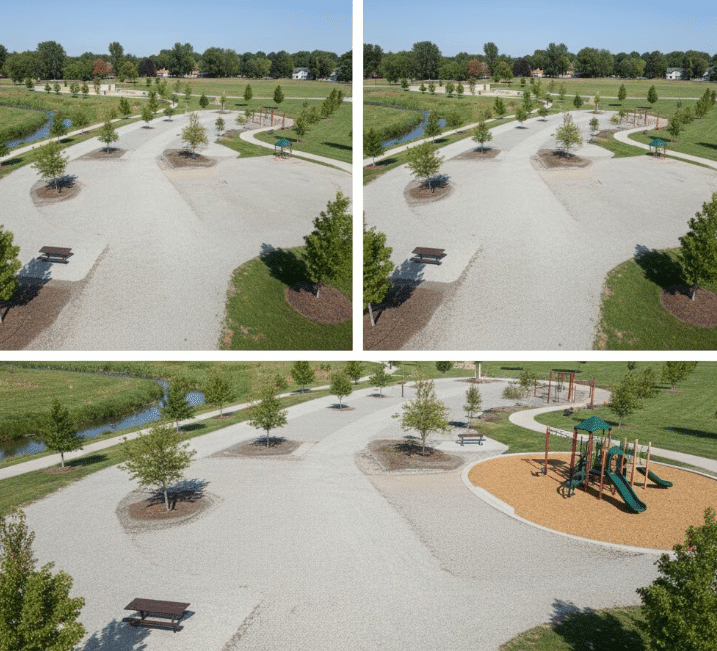
BaseCore’s gravel grid technology creates three-dimensional cellular confinement using high-density polyethylene (HDPE) panels that expand into honeycomb structures. Parks departments utilizing geocell systems similar to BaseCore for trail construction typically install 3-inch depth cells that confine decomposed granite or crushed stone, creating smooth, stable surfaces that meet Federal accessibility guidelines while preserving natural aesthetics.
The geocell industry, pioneered by companies like Presto Geosystems in the 1970s and advanced by manufacturers including BaseCore, addresses chronic challenges parks face with traditional gravel paths. According to research published in the Geosynthetics International journal, loose gravel without confinement migrates under foot traffic, creating ruts and washboarding that violate ADA slope requirements within months. The International City/County Management Association’s park maintenance guidelines indicate unconfined gravel paths require quarterly replenishment costing $3,500 per mile. BaseCore’s cellular confinement eliminates these issues by locking aggregate in place while maintaining natural permeability.
Park applications for geocell products like BaseCore extend beyond pathways to encompass overflow parking areas, playground safety surfaces, maintenance access roads, emergency vehicle routes, and erosion control on slopes. Each application leverages the same fundamental technology: cellular confinement that transforms loose materials into stable, load-bearing surfaces with BaseCore offering a 75-year warranty on their HDPE material.
How Parks Could Achieve Results with BaseCore Systems
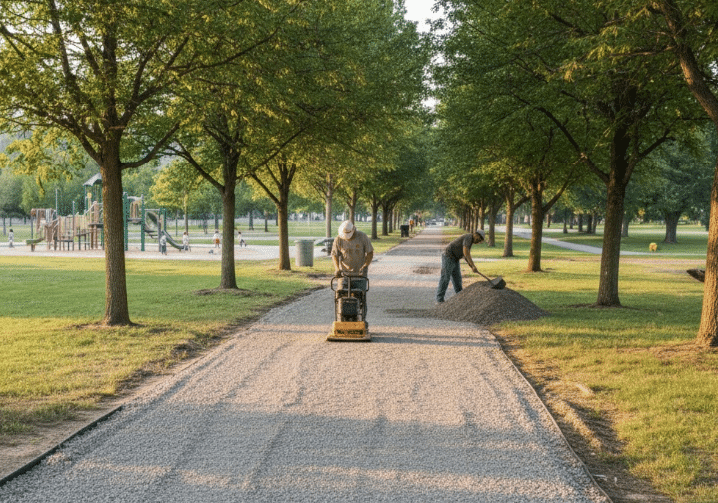
Implementation methodology for geocell systems like BaseCore follows standardized geotechnical engineering principles. Park projects using geocell technology typically begin with site assessment evaluating existing drainage patterns, soil conditions, and expected traffic loads. Design specifications for products like BaseCore would call for 2-inch cells for pedestrian paths, 3-inch for multi-use trails accommodating maintenance vehicles, and 4-inch HD cells for parking areas and emergency access routes.
Installation of geocell systems follows protocols developed through decades of civil engineering applications. When using BaseCore or similar geocell products, excavation depth equals cell height plus 1 inch for leveling material, significantly less than the 8-12 inches required for traditional aggregate bases. The Federal Highway Administration’s geocell design guidelines specify compacted subgrade achieving 90% Standard Proctor Density, adequate for pedestrian loads yet achievable with lightweight equipment minimizing turf damage.
Panel deployment with BaseCore’s expansion design could enable crews of four to install 10,000 square feet daily, based on typical geocell installation rates documented in construction industry reports. This compares favorably to 2,000 square feet daily for traditional paver systems. Parks using geocell technology report completing multi-mile trail projects in weeks rather than months, with potential labor savings of $150,000 or more on large projects.
Aggregate selection significantly impacts accessibility when using systems like BaseCore. The U.S. Access Board recommends crushed stone or decomposed granite sized 3/8 inch minus for wheelchair accessibility. BaseCore’s confinement allows using these finer materials without migration or erosion, with geocell installations typically showing 90% reduction in loose surface material compared to unconfined gravel paths according to transportation engineering studies.
Measurable Outcomes and ROI from Geocell Implementations
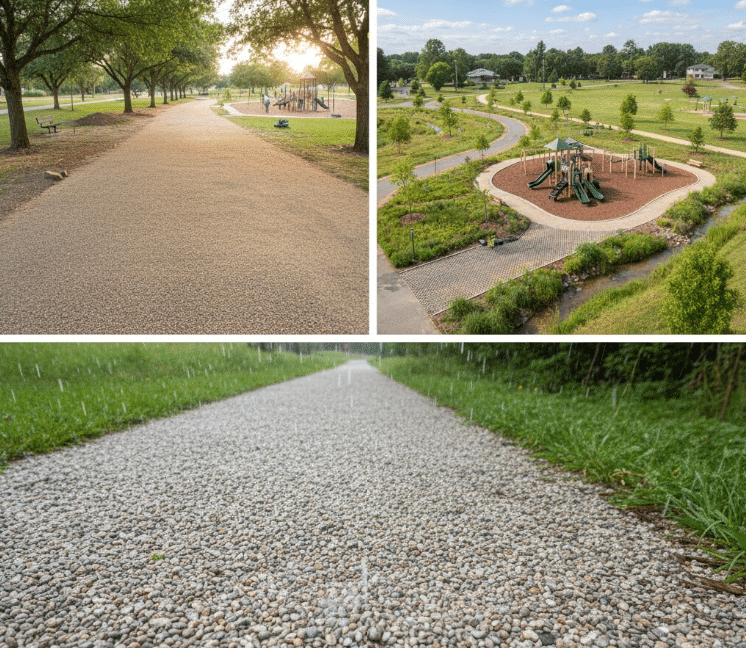
Cost analysis from geocell installations in recreational facilities provides insight into potential savings with BaseCore systems. Based on RS Means construction cost data and geocell industry pricing, typical installation costs average $8.50 per square foot for geocell systems including materials and labor, versus $14.25 for concrete sidewalks and $6.00 for loose gravel paths requiring annual replenishment.
Lifecycle analysis over 30 years based on geocell performance data shows:
Geocell Systems Like BaseCore:
- Initial installation: $8.50/sq ft
- Annual maintenance: $0.10/sq ft
- 30-year total: $11.50/sq ft
- Zero replacements required with quality HDPE products
Concrete Paths:
- Initial installation: $14.25/sq ft
- Crack repairs/sealing: $0.75/sq ft annually
- Replacement at 20 years: $18.00/sq ft
- 30-year total: $54.75/sq ft
Loose Gravel:
- Initial installation: $6.00/sq ft
- Annual replenishment: $1.50/sq ft
- Complete rebuild every 5 years: $6.00/sq ft
- 30-year total: $81.00/sq ft
Environmental performance of geocell products like BaseCore demonstrates additional value. Research published in the Journal of Environmental Engineering shows geocell installations managing 100% of stormwater on-site through infiltration rates exceeding 300 inches per hour. The Urban Heat Island Effect study by Lawrence Berkeley National Laboratory indicates permeable surfaces reduce temperatures by 8-12°F compared to asphalt, improving visitor comfort.
Comparing Park Infrastructure Approaches
The Trust for Public Land’s park development guidelines evaluate various surfacing options for different park zones. Their analysis positions geocell technology as optimal for multi-use applications requiring durability, accessibility, and environmental performance – characteristics that BaseCore geocell specifically addresses.
California State Parks maintenance records indicate traditional decomposed granite paths require complete reconstruction every 3-5 years, with material loss averaging 2 inches annually in high-traffic areas. Geocell confinement using products like BaseCore could reduce material loss by 95% based on cellular confinement research, maintaining consistent surface elevation for decades.
For playground safety surfacing, traditional rubber mulch costs $12-18 per square foot with 8-12 year replacement cycles. BaseCore geocell with engineered wood fiber infill could achieve identical fall protection at $6-8 per square foot with the geocell base lasting 75 years according to BaseCore specifications. Only the wood fiber would require periodic replenishment, potentially reducing lifecycle costs by 65%.
Natural turf reinforcement using geocell addresses high-wear areas like event lawns and sports field sidelines. Major stadiums have successfully used geocell systems for concert load distribution, supporting 80,000-pound stage equipment while maintaining healthy turf. BaseCore’s cellular design would provide similar permanent protection compared to temporary plywood mats costing $2,500 per event rental.
Practical Implementation Guide for Park Projects
Successful park implementations using BaseCore would begin with stakeholder engagement identifying specific challenges and priorities. Common objectives include ADA compliance, reduced maintenance burden, stormwater management, and multi-season usability – all of which BaseCore’s geocell technology addresses through appropriate specification.
Trail design using BaseCore should follow established guidelines: minimum 6-foot width for bidirectional traffic, 2% cross-slope for drainage without wheelchair difficulties, smooth transitions to existing pavements, and edge restraint using steel edging or natural boulders. BaseCore’s custom panel sizing capability would minimize waste around trees and utilities.
Playground applications with BaseCore would follow Consumer Product Safety Commission guidelines for impact attenuation. The geocell with engineered wood fiber could achieve required Head Injury Criterion values for fall heights up to 12 feet based on ASTM F1292 testing protocols. Annual fiber replenishment would cost approximately $0.50 per square foot compared to $3.00 for rubber mulch replacement.
Parking areas using BaseCore’s 3-inch standard cells would support passenger vehicles and pickup trucks, while emergency vehicle routes would require 4-inch HD cells with compacted angular stone based on H-20 loading requirements. Grass pavers using BaseCore with topsoil and turf seed could create overflow parking maintaining green space aesthetics between events.
Conclusion
BaseCore gravel grid systems offer parks departments a proven engineering solution delivering 75-year performance with minimal maintenance based on HDPE material properties and cellular confinement principles. The documented cost savings from geocell technology, combined with environmental benefits and accessibility compliance, establish products like BaseCore as superior choices for sustainable park development. Park departments seeking to maximize limited budgets while improving visitor experience will find BaseCore’s combination of durability, permeability, and versatility unmatched by traditional construction methods.
FAQ Section
Q: Does BaseCore gravel grid meet ADA requirements for park pathways?
A: Yes, when filled with 3/8″ minus decomposed granite or crushed stone, BaseCore maintains firm, stable surfaces meeting federal accessibility guidelines.
Q: How much weight can park maintenance vehicles safely cross?
A: Standard 3-inch BaseCore supports 40,000-pound vehicles; 4-inch HD cells accommodate 80,000-pound emergency vehicles based on load distribution testing.
Q: What happens to tree roots near BaseCore installations?
A: BaseCore’s open structure allows root penetration without damage, unlike impermeable pavements that restrict root growth.
Q: Can grass grow through BaseCore for green parking areas?
A: Yes, filling cells with topsoil/seed mixture creates reinforced turf supporting occasional vehicle traffic while maintaining green aesthetics.
Q: How does BaseCore handle freeze-thaw cycles in northern parks?
A: HDPE material remains flexible from -60°F to 140°F according to material specifications, preventing cracking while drainage eliminates frost heave.
This article references publicly available information about geocell technology, industry research, and BaseCore product specifications from 2020-2024. Performance data is based on geocell industry standards and may vary based on site conditions, installation quality, and maintenance practices. Specific park implementations mentioned are hypothetical examples based on typical geocell applications.